In my last blog I wrote about adjusting to playing Marvel Champions without the trusty guide of competition showing me where true North lies the whole time. At first that freedom to do whatever I wanted because there may not be a 'wrong' way to go seemed really nice, but rapidly it turned into deckbuilding agoraphobia.
I felt like a little Civilisation settler, standing alone in my little island of visible squares and surrounded on all sides by the unknown. Where should I go first? Did I want to find a river? Mountains? Forests? Indeed should I go anywhere at all or should I start my first town right here?

"Hey, experienced player. Can you help me?"
"Sure!"
"I'm new here, what's good, what should I do first?"
"Well, you can go anywhere really and do whatever you want"
"Oh. Ok. Thanks."

Staring at my full collection of Marvel Champions hero packs and aspects I might be just as hopelessly lost as that Civilisation Settler or World of Warcraft newbie. But I'm a self-starter and I felt like I needed to give myself some points of reference to work from.
I set out to look at all the heroes on offer and see if I could understand what they did and how they worked a bit better, so that I knew what I was dealing with.
KNOW YOUR HERO
Disclaimer: I'm going to talk about the heroes of Marvel Champions and I'm going to break them up into five broad types of hero. This sort of thing tends to get people very 'engaged' because they feel like they're being told what they can and can't do with their heroes. What I want to make clear is that I'm talking about how a character might *lean* towards a particular style of deck or play. That's leaning, not planking so that they can only do that one one thing and can't do anything else. It's not even like a Michael Jackson lean where it's a huge effort.

Most of the time it's just a, you know, "it feels a bit more comfortable just resting my shoulder here" kind of a lean. Pretty much any hero CAN do pretty much anything, some just do it a little bit more comfortably than others. Think of it like trying to follow the deckbuilding feng shui of the natural strengths of weaknesses of your hero's stats and their 15 hero cards.
I looked at every hero and their 15 cards that you have to take in your deck when you play them. I looked at the cost of those cards, but first I went through and bundled those effects into five broad classes:
- General Economy - these are cards which produce resources for you to play other cards, or which draw you more cards (which you could use as resources to play other cards). Some clear examples of cards in this group are Captain America's Super-Serum which remains in play, the one-time use Vibranium that Black Panther has. It also includes things like Spider-Man's hero abilities to both produce a Tech resource in Alter-Ego form or draw a card in Hero form Spider-Woman's Finesse (which can pay for any Aspect card), Ant-Man's Pym Particles, She-Hulk's Focused Rage etc.


- Internal Economy - the smallest subset I used, these are economy cards which are mainly focused on supporting the hero's other cards, like Hawkeye's Expert Marksman which can only pay for Arrows, or Black Widow's Gauntlets.


- Offensive - you may think that 'offensive' refers to Attacks and dealing damage but I took a broader view that offense included anything that was proactive and attacked the villain's position and cards. That could be damage from attacks, like Repulsor Blast, but it could also be thwarting schemes with a Sub-Orbital Leap or destroying minions with Explosive Arrows - anything that saw your hero taking the fight to the villain. It also included some hero abilities that were similar, such as when Ant-Man flips to either his Giant or Tiny form. Finally, Offensive cards also include pretty much any signature ally you might think of as they tend to spend their time attacking and thwarting.


- Defensive - just as 'Offensive' was more than just attacks, Defensive cards are more than just damage prevention or healing. I tried to group together everything that was about slowing down what the villain could do to the hero, so it's got Spider-Man's Backflip in this group of cards but it also has his Enhanced Spider-Sense to prevent a nasty Encounter deck reveal. It also includes most Status effect changes, such as Stunning or Confusing the villain, or using Tough to avoid future damage.


- Engine Investment - most hero cards have a standalone effect but there are some heroes whose cards operate a little bit differently. What I call Engine Investment is for the heroes whose cards often have built-in interdependencies where if you play them alone they do very little (or nothing) but combined together they can become incredibly powerful. Using those cards often means making a resource investment up front which you won't immediately see a benefit from until you've assembled a few of the pieces in one place. The clearest example is Black Panther, who needs to assemble multiple pieces of his suit together before he can really take advantage of Wakanda Forever. Quicksilver is quite similar as his ability to ready several times in a turn is far more effective once you've got other pieces that increase his stats. Finally, Iron Man's dependence on pieces of armour to both take control of the table and sustain a large hand size put a lot of his cards in this group too.


As well as looking at what the hero's cards did I took a view on how many resources they cost to play (including the cost of the card you're playing, so a One-Two Punch from She-Hulk costs 2 cards) and then I compared that to the Hero hand size of the hero, just as a way of ranking whether the heroes would find it easy to play their cards because they were cheap, or might need a little help if they were more expensive. Comparing it to the hero's hand size really shone a light on the restrictions that heroes with just 4 hand size feel, I think.
That's enough preamble, let's take a look at what I worked out...

TEAM PLAYERS

Firstly, their hero cards include strong economic support that you can use to play any other cards you want to play with. Secondly, their own hero deck has a mixture of offensive and defensive abilities that can flex to whatever you need from them. Finally the cards in their hero decks tend to be on the cheap side. That means there's room in the cost curve for you to play some expensive and hard-hitting cards from your chosen aspect, but it also means (if we assume it follows that cheap cards have less impact on the game than expensive cards) they might need your aspect to bring a bit more firepower to the table.
A few example Team Players are:
- Captain America - Super-Soldier Serum is one of the best resource generating Supports in the game and as Steve Rogers you also get assistance playing heroes. Captain America has a suite of low-cost but low-impact cards, such as Fearless Determination, Shield Block and Captain America's Helmet that are happy to take a back seat in your deck and let the other 25 cards you bring do a lot of the heavy lifting.
- Captain Marvel - in both Alter-Ego and Hero form Captain Marvel has strong & steady economic abilities that compliment her powerful one-shot Energy Absorption resources. With 3 Energy resources from one card there's no other hero in the game who is as good at generating huge bursts of economy to play expensive aspect cards. Like Captain America she also has a flexible, but relatively low-impact, set of hero cards with the exception of her Energy Channels when they're ready to be unleashed.


- Spider-Woman - Jessica Drew's resource generation is a bit weaker than the other Team Players but as it can help to play any aspect card Finesse is still a strong economic Support. The rest of Spider-Woman's gimmick is being a little bit of every aspect so she naturally fits the template of having some offensive effects and some defensive effects. Just as importantly the main reason to bring Spider-Woman is to deckbuild with two aspects and that alone makes her a Team Player - if you didn't want to be showing off what aspect cards could do you probably wouldn't be playing Spider-Woman to begin with!
SPECIALISTS
Specialists are the smallest group I've identified - currently just two heroes - and I almost killed this group entirely to lump Black Widow and Hawkeye in as more Team Players. The big distinguishing feature for Specialists is that their card pool has a really strong internal theme (Preparations/Arrows) and their economy cards are dedicated to supporting that theme so can't be used to play any other cards. I think that changes how you approach deckbuilding with these heroes as they can be so strongly internalised to their hero mechanics that they often won't really interact with the other 25 cards you put in.


At the moment there are only two Specialists in the game:
- Black Widow - each aspect has their own Preparation cards so Black Widow isn't entirely independent of the rest of your deck, but the flow of having to set your little traps up in advance of anything happening can mean you really need some problem-solving cards in the rest of your deck because if she ever gets behind in the game it's not easy for her to catch up.
- Hawkeye - at least Black Widow has other Preparation cards but poor Hawkeye is completely isolated as the only Arrow cards in the game are in his hero set! Hawkeye's starting 15 cards will be virtually no help at all to the remaining 25 cards you add to the deck and you'll probably need to approach deckbuilding Hawkeye almost as though you're running two mini-decks alongside each other rather than one cohesive deck of 40 cards.
POWERHOUSES

There's two really defining traits for these heroes in my eyes: firstly that their cards are very proactive and take the fight right to the villain's door, and secondly they're often more expensive cards but the heroes don't bring much of their own economy to help play them. It means that when you're building these decks you often need to be thinking more in terms of adding cards that will help you play your signature hero cards. That contrasts with Team Players like Spider-Man or Captain America who tend to be asking how they can help you play other cards.
A few example Powerhouse heroes are:
- Doctor Strange - I've got five hero classes but I could have made it six. That sixth hero class would be called "Doctor Strange" and would feature only one hero: Doctor Strange. Doctor Strange is too good. Every other hero has 15 hero cards. Including the Invocation deck that he has access to every turn, Doctor Strange has 20 cards. Every other hero loses a card from their hand to play one of their signature hero card, but the Invocation deck isn't in your hand so you don't lose a card (although it costs exhausting your hero). The spells in the Invocation deck are also insanely powerful and insanely cheap. I said that the 'Powerhouse' group didn't correspond to being the best heroes... well in Doctor Strange's case it does.


- Scarlet Witch - she's the most recent new hero and the Scarlet Witch perfectly fits the definition of a Powerhouse character. All Wanda needs to do in order to rewrite reality the way she wants it and win the game is keep casting her Magic Shields, Hex Bolts and Molecular Decays as often as possible! It's a powerful set of cards but an expensive one that really benefits from the rest of the deck giving her the economic help she needs to sustain all her hexes.
- Wasp - in case you've not noticed the trend, the 'Powerhouse' style of hero has been a pretty recent thing and it's been how most of the newer heroes have been designed. Wasp is no exception to that with Wasp Sting, Pinpoint Strike and Giant Help being some of the hardest-hitting offensive cards in the game. But they're also expensive - only two Rapid Growth cost less than 2 resources to play in her hero deck - and there's no economic support in Wasp's deck at all so she needs all the help she can get from the cards you're going to put with her.
I do think it's notable that a lot of the most recent heroes to be released have fallen into this Powerhouse model of having really high-impact and distinctive effects but none of the resource support to play them. Looking at some of the things coming in Guardians Most Wanted, like Groot and Rocket, it seems like that trend is likely to continue for a while. It puts a big burden on players to play a lot of the same resource generators like Quincarrier and Helicarrier in every deck, but it does also mean that the individual flavour and personality of the hero impacts the table a lot more because their hero deck is a centrepiece of your play.
BUILDER

But that late game power to simply brush aside even the greatest threats comes at a price - you have to invest both resources and time into playing several weak turns while you assemble all your toys in one place. That tends to make the Builders much more passive in the early portion of the game, often preferring to stay in Alter Ego form for a couple of turns just to draw more cards and dig more deeply through their deck. That passive style of play doesn't sit well with me personally - I want to be out there fighting crime in my spandex straight away - but for other players it's the only way to play.
Each of the builders has their own nuances and they're certainly not the same as one another, but I think they're overall similar enough that if you like one you'd like the others.
- Black Panther - T'Challa is simultaneously the most all-in on their engine building (9 cards of out his deck do NOTHING if they're not being used in conjunction with each other) and also the most supportive of the rest of your deck. They can almost function as a hybrid Team Player as their whole Black Panther schtick is just 1-2 resources in cost and they have abundant stores of Vibranium to help you play the rest of your deck.
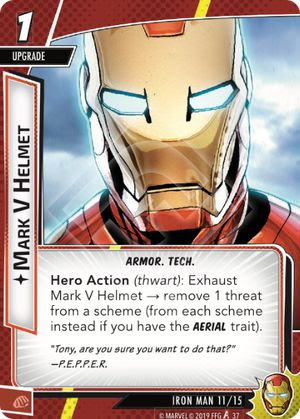
- Iron Man - unlike Black Panther each piece of Iron Man's suit does something alone, but because his hand size is tied to how many pieces of Tech he has in play it tends to mean he'll only switch into Hero form and start using those pieces once he's got a few of them out. Evaluating the cost of Iron Man's cards as a % of his hand size is complicated by this factor - switch to Hero form too early and it can really cramp his style, but when he's up to 6 or 7 cards in hand he can really start swinging twice as hard as a normal hero.


- Quicksilver - Quicksilver is probably most like Black Panther in that you can get some value from cards like Always Be Running in the early game, but really you're looking to have all your buffs out and be hanging on for multiple copies of Always Be Running to arrive in a single turn to go out in a blaze of speed! But if Black Panther is a hybrid Team Player then Quicksilver is a hybrid Powerhouse, with a high average cost in his cards and very little economic support.
MUSCLE

One less card may not sounds like a lot but for the Muscle heroes it means that everybody else is playing with 25% more resource generation every turn and that restriction on how much harder it is to play either one expensive card in a turn, or two cheaper cards, is a huge impact on how you approach deckbuilding with them. You need to think hard about including any 4 cost card as it needs 5 cards in hand to play it (the card itself plus 4 resources), and even playing a 1-cost and a 2-cost in one turn is going need some extra help from somewhere. It may mean needing to flip back to Alter-Ego form more often just to see cards and get things into play!
It's not all bad, though.
Although these heroes have stunted resource generation their hero cards are stacked with higher ATK values and higher health totals, so you're often looking to make the most of their hero cards themselves as much as you are the cards in the hero deck. You're always going to have that extra restriction in mind when deckbuilding for them, though.
- Thor - the God of Thunder is an oddity in the Muscle group, because if you play him a certain way he can actually be drowning in resources. He has permanent resource-generating Supports, his hero ability lets him draw cards and in Alter-Ego form he can happily discard Mjolnir from hand as a resource then retrieve the hammer immediately. While that's all true the most common uses of Thor do try to keep Mjolnir in play as an ATK buff and he will operate like most Muscle heroes.
- Hulk - ah Hulk, poor Hulk. Generally regarded as the worst hero in the game, Hulk labours under the combined struggles of a low hand size and expensive collection of hero cards and it's not even like he's got a great hero ability to make up for it!


- She-Hulk - if you assume the dreadful Legal Practice is actually going to get played then She-Hulk's hero cards actually have the biggest cost burden of any hero, relative to her hand size of 4 in hero form. The saving grace for She Hulk is that she's far more comfortable flipping back and forth into Alter-Ego form, and with 6 cards in her Alter-Ego form's hand size there's even more incentive to do so. That natural release valve from the Muscle group's throttled resource generation really helps She-Hulk find a role.
KNOWLEDGE IS POWER
So let's say you decide to believe me that the heroes can be classified this way. What can you do with this information?

I've been on a journey with Protection as I struggled to really understand what the aspect was for. I started out in Black Widow where a lot of little Protection permanents like Unflappable, Armoured Vest, Electrostatic Armour, Energy Barrier all joined Black Widow's Preparations in play, meaning her deck rapidly became very thin. But something about that deck wasn't working for me and if I fell behind I stayed there. I ported more or less the same card pool over to Spider-Man and tried it there but the outcome was pretty similar and I spent too much time hoping I drew a Swinging Web Kick to be able to solve a problem on the table. I put it into Black Panther where it would fit with his native Retaliate ability, but I found that I was actually doubling down on being passive and waiting for Wakanda Forever because Black Panther was a Builder.


When I finally put those same cards into a Powerhouse hero, Ant-Man, everything suddenly worked much better for me. The Protection cards were cheap and low-impact and because he was a Powerhouse I knew to bring a healthy dose of economy generation like Team Building Exercise, Quincarrier, Helicarrier and Power of Protection. A superhero who brought plenty of proactive abilities was exactly what *I* was missing from the Protection card pool previously. I'm sure other players would have made it work in Black Panther or Spider-Man, but it wasn't working for me.
And I think it also taught me about the sort of heroes I'll enjoy personally. I know now that if I'm going to play a passive Builder type of hero I'm going to want to put it with a proactive aspect just so that my ADHD doesn't kick in while I wait for all the pieces to assemble.


Another example is the Go-Go-Goliath deck from my first blog. I recognised up front that Hawkeye's arrows were very insular so deliberately added 25 cards that were also quite self-contained and had a strong internal theme, without which my deck might be lacking direction.


And I see a lot of comments from players who are used to the old Team Players style of hero, like Captain America or Ms Marvel, and are trying to pick up new Powerhouse style heroes like Scarlet Witch or Wasp by just putting in the same sort of cards that were working for them in their old heroes. They find themselves struggling to play their hero's cards and come away thinking the hero isn't very good, when actually they need to be adjusting their approach to bring in cheaper Aspect cards and as much supporting economy as possible. Powerhouses need different support to Team Players, but I don't think that definition is very well understood or widely spoken about.

For me these classes aren't a strait-jacket on how you play your heroes, it was the opposite. As a new player struggling to grasp all the options available to me starting to think about them like this was the key to unlocking successful decks and playstyles. I just finished crushing the Rise of the Red Skull campaign with Ant-Man but without thinking about the game this way I'm not sure I would even have tried Protection with him.
I hope some of this way of thinking about the heroes makes sense to you, too, and if it's helped you understand and unlock a hero or aspect you were struggling with up to now I'd love to hear about it!